The Mechanics Nobody Mentions: What Tech Pros Who Actually Build Networks Know That Others Don't
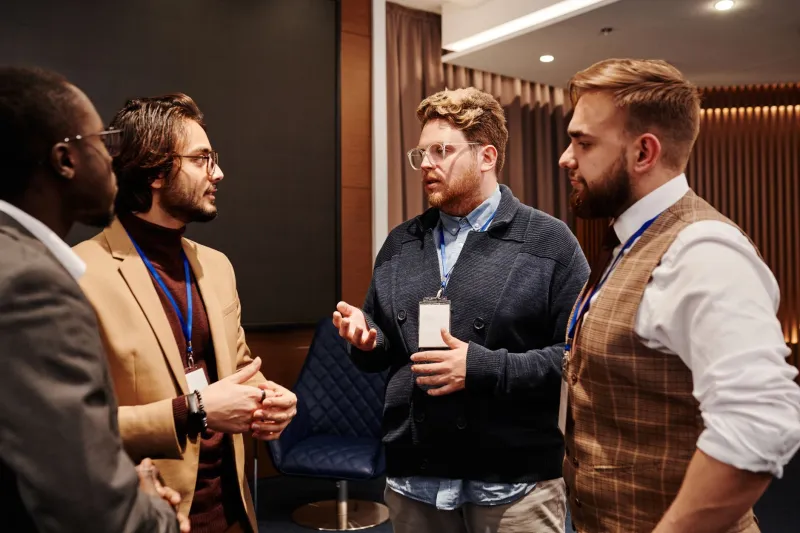
Every tech conference has two kinds of attendees. There's the person who collects a stack of business cards, shakes a hundred hands, and heads home feeling like they crushed it — only to wonder three months later why none of those connections ever went anywhere. And then there's the person who talked to maybe eight people, left early, and somehow ended up with three genuine relationships, a job lead, and a collaborator on a side project they've been sitting on for a year.
The difference isn't charisma. It isn't luck. It's a specific set of skills that almost nobody teaches, because most people assume networking is either a personality trait you're born with or a numbers game you grind your way through. It's neither.
At ZYX Network, we talk to a lot of tech professionals — founders, engineers, designers, PMs — and the ones who consistently build meaningful connections share a surprisingly unglamorous set of habits. Here's what they actually do.
They Ask Questions That Can't Be Answered in One Sentence
Most people at tech events ask the same three questions: What do you do? Where are you based? What are you working on? These are fine as openers, but they're conversational dead ends. The answer is usually a rehearsed elevator pitch, and then you're both standing there waiting for the next thing.
Strong networkers ask questions that invite a story. Not "What are you working on?" but "What's the hardest part of what you're building right now?" Not "How long have you been in the industry?" but "What made you switch from hardware to software?" These questions do something important: they signal genuine curiosity, and they give the other person something real to chew on. People remember conversations where they felt heard, not conversations where they felt interviewed.
The follow-up question is even more important than the opener. Most people ask one question, get an answer, and then pivot to talking about themselves. Skilled networkers stay in the thread. They pull on the detail that feels most alive in what the other person just said. That's what turns a two-minute exchange into a twenty-minute conversation.
They Remember the Specific Thing, Not the General Impression
Here's a simple test: think about someone you met at an event six months ago. What do you actually remember about them? If you're like most people, you remember a vague impression — "she was in fintech," "he seemed sharp," "they were from Austin" — but almost nothing specific.
The people who build real networks train themselves to remember one concrete detail per person. Not their job title. Something personal. The startup they almost joined. The framework they're obsessed with. The city they're thinking about relocating to. The product launch that kept them up for three weeks straight.
When you reach out three weeks later and reference that specific thing — not the general stuff on their LinkedIn, but the actual thing they told you — the message lands completely differently. It tells them the conversation mattered. That's a rare feeling, and people gravitate toward whoever makes them feel it.
Some people keep literal notes. A quick voice memo on the walk back to their car. A line in their phone's notes app before they go to sleep. It sounds obsessive until you realize how much it changes the quality of every follow-up you ever send.
They Follow Up Before They Need Anything
Most people follow up when they want something. A referral. An intro. A job. And the person on the receiving end can feel it immediately, even when the message is dressed up in pleasantries.
The most effective tech networkers follow up when they have something to give. An article that directly relates to the problem the other person mentioned. A heads-up about an event they'd probably enjoy. An intro to someone who's working on something adjacent to their interests. The follow-up isn't about the relationship yet — it's about demonstrating that they were actually paying attention.
This isn't manipulation. It's just generosity with a good memory. And it creates a completely different dynamic than the standard "great to meet you, let's stay in touch" email that goes nowhere.
They Create Reasons to Reconnect That Aren't Awkward
One of the biggest reasons tech relationships stall is that there's no natural reason to keep the thread going. You had a great conversation, you both said you'd grab coffee sometime, and then six months pass and reaching out feels weird.
The people who avoid this problem create ongoing reasons to stay in contact. They share things they're building publicly — writing, open-source projects, talks — so their network has something to engage with. They host small informal gatherings, even just a Zoom call with five or six people who might enjoy each other. They tag people in relevant conversations on platforms where their network actually lives.
The goal isn't to manufacture touchpoints. It's to be consistently present in a way that feels natural rather than transactional. When you're regularly sharing things of genuine value, reconnecting after a gap doesn't feel like you're cold-calling someone. It feels like continuing a conversation.
They're Honest About What They're Looking For
Counter-intuitively, one of the most effective networking skills is just being direct about what you actually need. Not in a demanding way — in an honest one. "I'm trying to figure out whether to go deep on ML infrastructure or stay more full-stack. Do you have a take on that?" is a much more compelling conversation starter than vague small talk about industry trends.
People like being asked for their real opinions. They like being useful. When you give someone a specific, genuine question to engage with, you're not being needy — you're being interesting. And you're making it easy for them to actually help you, which most people want to do if they can.
The professionals who build the strongest networks at ZYX Network's events and communities aren't the loudest in the room. They're the ones who show up prepared to be curious, stay present in the conversation, and follow through on the small things afterward. That's not charisma. That's craft. And like any craft, it's learnable.