What Your Remote Team Can't See Is Slowly Costing You
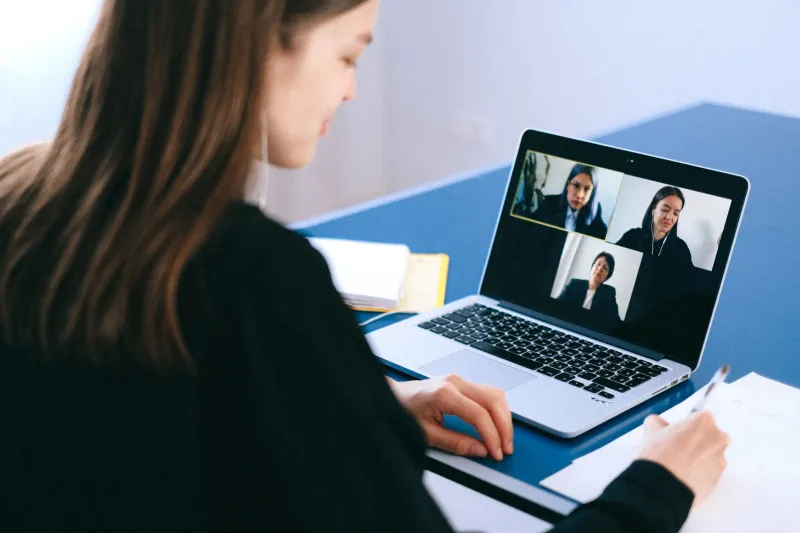
Let's be honest: remote work won. The argument is over. Distributed teams are building some of the most interesting products in tech right now, and nobody serious is calling for a full return to open-plan offices and mandatory ping-pong. But winning the flexibility debate doesn't mean everything's fine. There's a cost being paid quietly, in the background, and most founders and team leads won't notice it until something goes sideways.
The cost is signal loss. Not the kind your ISP warns you about — the human kind.
The Stuff That Doesn't Fit in a Calendar Invite
Think about the last genuinely great hire you made, or the last partnership that actually moved the needle. Chances are, some of what made those relationships click happened in a moment that was never scheduled. A hallway conversation after a meeting ended. A coffee run where someone said something they wouldn't have typed in Slack. The way a candidate lit up when they started riffing on a problem, versus the polished version of themselves they'd been performing on camera.
None of that translates cleanly to a Zoom grid. And the thing is, we've gotten so good at running distributed teams that we've stopped noticing what we're not seeing.
Social psychologists have a term for this: thin-slicing — the brain's ability to make surprisingly accurate snap judgments from tiny fragments of behavior. We do it constantly in person without realizing it. The micro-hesitation before someone answers a question. The body language that says "I'm checked out" before the words ever do. The energy in a room when a team is genuinely excited about something versus dutifully nodding through it.
Zoom flattens all of that. You get a face in a box, usually from the shoulders up, often with a ring light making everyone look slightly more confident than they feel. It's not nothing — but it's a fraction of the bandwidth humans evolved to use when reading each other.
The Hiring Problem Nobody Wants to Admit
Here's where this gets expensive for startups specifically. Early-stage hiring is less about credentials and more about fit — not culture fit in the vague, exclusionary way that phrase gets misused, but genuine alignment on how someone thinks, handles pressure, and shows up when things get messy.
That's hard to assess in a structured interview loop. It's even harder over video. And when your entire hiring pipeline is remote, you're essentially making high-stakes bets on incomplete information.
Some teams have tried to compensate with more interviews, longer take-home projects, or elaborate async challenges. Those help at the margins. But they don't replace the signal you get from watching how someone navigates an unfamiliar room, handles a spontaneous side conversation, or responds to an unexpected question when they're not in "interview mode."
The candidates who are great on paper and great on Zoom? They're often genuinely great. But occasionally — and this is the painful part — they're just great at Zoom. And you won't find out the difference until they're three months in and something's off in a way you can't quite name.
Spontaneous Collisions Are Where Ideas Actually Come From
There's another layer here that matters less for hiring and more for the actual work: the serendipitous collision. The moment when the engineer who's been stuck on a problem for two days overhears a product conversation and suddenly has the answer. The lunch where two people who've never worked directly together realize they're building toward the same thing from different directions.
Remote teams don't get those. They get what they schedule. And scheduled conversations are inherently filtered — people come in with an agenda, a purpose, a role to play. The messy, generative overlap that happens when people share physical space is almost impossible to engineer through a calendar.
Some companies have tried virtual watercoolers, random Donut pairings, and themed Slack channels meant to simulate the casual layer of office culture. Most people who work remotely will tell you these feel exactly like what they are: simulations. Appreciated, sometimes fun, but not quite the real thing.
What Actually Helps (And It's Not Forcing Everyone Back to HQ)
None of this is an argument for mandating five days a week in a WeWork. That ship has sailed, and frankly the talent market won't tolerate it. But it is an argument for being intentional about creating the conditions where real human signal can flow.
A few things that actually work:
Invest in meaningful in-person moments. Quarterly offsites get a bad reputation because they're often overscheduled and exhausting. But when they're designed with real whitespace — unstructured time, shared meals, low-stakes social situations — they do something that months of video calls can't. They let people be full humans around each other. The ROI on a well-run offsite isn't just the strategic alignment; it's the trust that gets built during the parts that aren't on the agenda.
Front-load in-person time for new hires. If you can get a new team member into the same physical space as their closest collaborators for even a week or two in their first month, you compress months of relationship-building into days. The informal moments — the lunch, the walk between buildings, the offhand comment at the end of the day — do more for onboarding than any documentation ever will.
Rethink how you evaluate candidates. If the role involves close collaboration and the stakes are high, find a way to create an unscripted moment in the process. Not a gotcha — a genuine conversation that's low on structure and high on space for the real person to show up. Even a casual coffee chat with a future teammate can surface things a formal loop won't.
Build rituals that create informal connection. Not mandatory fun — nobody wants that — but recurring touchpoints that are genuinely low-pressure and optional. A Friday afternoon demo where people share random things they've been working on. A Slack channel where it's okay to be weird and off-topic. Small things that slowly build a shared texture to the team.
The Signal Is Still There — You Just Have to Go Get It
Distributed work is here to stay, and the teams that thrive in it won't be the ones who pretend the tradeoffs don't exist. They'll be the ones who are honest about what remote can't do, and who build intentional systems to compensate.
The human signals that matter most — the ones that tell you whether a hire is going to be transformative or just fine, whether a partnership has real chemistry or just surface-level alignment — those signals are still out there. They haven't disappeared. They're just not going to come through a screen on their own.
You have to create the conditions to receive them. That's the job now.


